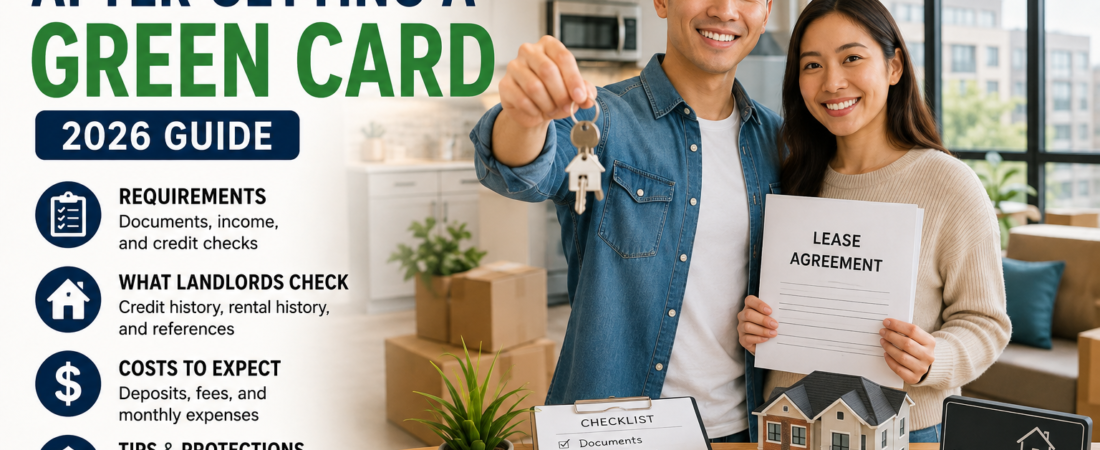
Finding a place to live is one of the most important steps when starting your new life in the United States. Learning how to rent an apartment after getting a Green Card can feel challenging, especially if you do not yet have a long U.S. credit, employment, or rental history.
Green Card holders can generally rent apartments just like other qualified applicants. However, landlords and property management companies may check your income, credit history, identification, and previous rental history before approving an application.
This guide explains what new permanent residents should know before renting an apartment in the United States.
Can a Green Card Holder Rent an Apartment?
Yes. Lawful permanent residents can generally apply to rent apartments and other residential properties in the United States.
Each landlord may have different screening requirements. A typical rental application may include identity verification, income verification, credit screening, and rental history.
Before paying an application fee, ask the landlord or property manager about the requirements so you know whether you are likely to qualify.
Documents You May Need
When you rent an apartment after getting a Green Card, prepare important documents before beginning your search.
A landlord may request:
- Government-issued identification
- Social Security Number, when applicable
- Employment information
- Recent pay stubs
- Bank statements
- Previous addresses
- Rental references
- Contact information
- Proof of income
New immigrants who recently started working may also find it useful to have an employment offer letter or other documentation showing expected income.
Income Requirements for Renting an Apartment
When you rent an apartment after getting a Green Card, landlords may require you to demonstrate sufficient income to afford the monthly rent.
Some landlords use an income-to-rent guideline, but there is no single income requirement used by every landlord in the United States.
If your employment history is short, the landlord may ask for additional evidence of financial stability.
Depending on the property and applicable law, this could include bank statements, savings, an employment letter, or a qualified guarantor.
What if You Have No U.S. Credit History?
Limited U.S. credit history is common for new Green Card holders.
Even if you had excellent credit in another country, that history may not automatically appear in U.S. credit reports.
If you have little or no U.S. credit history, a landlord may consider other information depending on its screening policies.
Possible supporting information may include:
- Proof of steady employment
- Bank statements
- Evidence of savings
- Rental references
- A qualified co-signer or guarantor
- Additional financial documentation
Starting to build U.S. credit early can make future apartment applications easier.
Do Landlords Check Your Credit?
Many landlords use tenant-screening reports that can include credit information.
Your credit history can help a landlord evaluate how you have handled financial obligations.
Before applying for several apartments, consider reviewing your U.S. credit reports for errors.
New permanent residents who have recently received a Social Security Number may initially have a limited or nonexistent credit file. Building credit responsibly takes time.
Security Deposits and Move-In Costs
Renting an apartment usually involves more than paying monthly rent.
Possible move-in expenses include:
- Security deposit
- First month’s rent
- Application or screening fees
- Utility deposits
- Parking charges
- Moving expenses
- Renter’s insurance
Security-deposit rules vary by state and sometimes by city. Local law may regulate how much a landlord can collect, how the deposit must be handled, permitted deductions, and when it must be returned.
Always understand the charges before sending money.
Do You Need Renter’s Insurance?
Some landlords require renter’s insurance as part of the lease.
Renter’s insurance can help cover personal belongings and certain liability claims depending on the policy.
Do not assume that the landlord’s property insurance protects your furniture, electronics, clothing, or other personal belongings.
Compare premiums, deductibles, coverage limits, and exclusions before choosing a policy.
Read the Lease Carefully
A residential lease is an important legal agreement.
Before signing, review:
- Monthly rent
- Due date
- Lease length
- Security deposit
- Late fees
- Utility responsibilities
- Parking rules
- Pet policies
- Maintenance responsibilities
- Renewal provisions
- Move-out requirements
Ask questions about anything you do not understand before signing.
Keep a copy of the signed lease and records of important payments and communications.
Avoid Rental Scams
Rental scams can target people who are unfamiliar with the U.S. housing market.
Be cautious when someone:
- Demands payment before showing the property
- Pressures you to transfer money immediately
- Requests unusual or difficult-to-reverse payment methods
- Refuses reasonable communication
- Offers rent far below comparable properties
- Cannot demonstrate a legitimate connection to the property
Verify the property and the landlord or property manager before sending money or sensitive information.
Understand Fair Housing Protections
Federal law provides important protections against housing discrimination.
The Fair Housing Act prohibits housing discrimination based on protected characteristics including race, color, national origin, religion, sex, familial status, and disability.
State and local laws may provide additional protections.
The U.S. Department of Housing and Urban Development provides information about fair housing rights and how to report suspected housing discrimination.
Prepare Before Applying
Preparing before your apartment search can make the process easier.
Consider completing these steps:
- Get a Social Security Number if eligible.
- Open a U.S. bank account.
- Begin building U.S. credit.
- Prepare employment and income documents.
- Create a realistic housing budget.
- Research neighborhoods and transportation.
- Review your credit reports when available.
- Prepare for legitimate move-in expenses.
Having these items ready can make it easier to respond quickly when you find the right apartment.
What to Do After Getting Your Green Card
Learning how to rent an apartment after getting a Green Card is an important part of establishing your new life as a permanent resident.
Other important steps may include:
- Getting health insurance
- Getting a Social Security Number
- Opening a U.S. bank account
- Building credit
- Getting a driver’s license
- Finding employment
- Understanding U.S. taxes
Completing these steps gradually can help establish the financial and identification records you may need throughout everyday life in the United States.
Final Thoughts
Learning how to rent an apartment after getting a Green Card is easier when you prepare your documents, income information, and finances before applying.
If you have little U.S. credit history, do not assume that renting is impossible. Ask prospective landlords about their qualification requirements and what documentation they accept.
Read your lease carefully, understand your local tenant laws, and verify the legitimacy of a rental before transferring money.
This article provides general educational information and is not legal, financial, or housing advice.