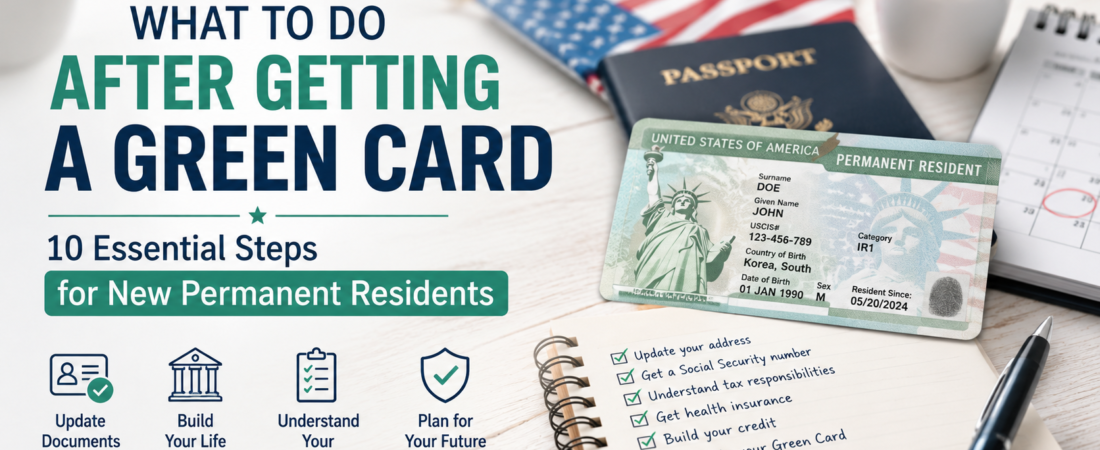
Getting a Green Card is an exciting milestone, but becoming a lawful permanent resident also comes with new responsibilities. Knowing what to do after getting a Green Card can help you protect your immigration status, establish your financial life, and prepare for your future in the United States.
Here are 10 important steps new permanent residents should consider after receiving their Green Card.
1. Check Your Green Card for Errors
As soon as you receive your Green Card, carefully review the information printed on it.
Check your:
- Full legal name
- Date of birth
- Country of birth
- Alien Registration Number (A-Number)
- Resident Since date
- Card expiration date
If you discover an error, review the current instructions from U.S. Citizenship and Immigration Services (USCIS) about correcting or replacing a Green Card.
Do not ignore mistakes, especially errors involving your name, date of birth, or immigration information.
2. Keep Your Green Card Safe
Knowing what to do after getting a Green Card starts with protecting your immigration documents.
Your Green Card is one of your most important immigration documents.
Make a secure copy of the front and back of the card and keep the copies separate from the original. You may also want to maintain secure digital copies of important immigration documents.
Avoid carrying unnecessary original immigration paperwork with you.
Permanent residents should also understand the federal requirements concerning possession of evidence of registration. Check USCIS guidance if you are unsure about what documentation you are required to carry.
3. Update Your Social Security Record
Many new permanent residents already have a Social Security number, but your immigration status may have changed.
Contact the Social Security Administration if you need to update your immigration status or correct information in your Social Security record.
Having accurate Social Security information is important for employment, taxes, Social Security benefits, and other financial matters.
4. Update Your Address When You Move
Moving to a new home does not automatically update your address with immigration authorities.
Most non-U.S. citizens are required to report a change of address to USCIS within the required period after moving. Always check the latest USCIS rules because requirements and procedures can change.
Updating your address helps ensure that important immigration notices are sent to the correct location.
Do not assume that changing your address with the U.S. Postal Service automatically updates your USCIS address.
5. Understand Your U.S. Tax Responsibilities
Permanent residents generally need to understand U.S. federal and state tax requirements.
For federal tax purposes, Green Card holders are generally treated as U.S. resident aliens and may be required to report income from both U.S. and foreign sources.
International tax situations can become complicated if you have:
- Foreign bank accounts
- Property outside the United States
- Foreign business income
- Investments in another country
- Income earned overseas
Consider speaking with a qualified tax professional if your financial situation involves multiple countries.
6. Build Your Credit History
A strong credit history can make life in the United States significantly easier.
Credit can affect your ability to:
- Get a credit card
- Finance a vehicle
- Rent an apartment
- Obtain a mortgage
- Qualify for certain financial products
Start by paying bills on time and keeping credit card balances manageable.
If you have little or no U.S. credit history, a secured credit card may be one way to begin establishing credit.
Building excellent credit usually takes time, so developing good financial habits early can be valuable.
7. Get Health Insurance
Medical care in the United States can be expensive, making health insurance an important consideration for permanent residents.
Depending on your circumstances, coverage may be available through:
- An employer
- A spouse’s employer
- The Health Insurance Marketplace
- Private health insurance
- Government programs, if you meet eligibility requirements
Compare premiums, deductibles, copayments, provider networks, and prescription coverage before selecting a plan.
8. Be Careful When Traveling Outside the United States
A Green Card allows permanent residents to travel internationally, but long trips outside the United States can create immigration issues.
Permanent residents are expected to maintain the United States as their permanent home.
Extended absences may raise questions about whether you intended to abandon your permanent resident status and can also affect eligibility for naturalization.
If you expect to remain outside the United States for an extended period, review current USCIS guidance about international travel and reentry permits before leaving.
Keep records showing your continuing ties to the United States, particularly if you travel frequently.
9. Learn Your Rights and Responsibilities
Permanent residence provides significant benefits, but it also comes with responsibilities.
Green Card holders can generally:
- Live permanently in the United States
- Work legally in the United States, subject to applicable laws
- Own property
- Attend schools and universities
- Receive protection under U.S. laws
Permanent residents must also obey federal, state, and local laws and comply with applicable tax and immigration requirements.
Certain criminal convictions or immigration violations can have serious consequences for permanent resident status. Seek qualified legal advice if you face an immigration or criminal matter.
10. Start Preparing for U.S. Citizenship
For many permanent residents, the next major immigration milestone is becoming a U.S. citizen.
Many Green Card holders may become eligible to apply for naturalization after meeting applicable residence and other requirements. Some spouses of U.S. citizens may qualify under different rules.
Naturalization requirements can include factors such as:
- Continuous residence
- Physical presence
- Good moral character
- English ability
- Knowledge of U.S. government and history
Eligibility depends on your individual circumstances, so check current USCIS naturalization requirements before applying.
Keeping tax records, travel records, addresses, and immigration documents organized from the beginning can make the naturalization process easier later.
What to Do After Getting a Green Card: Common Mistakes to Avoid
Receiving permanent residence does not mean you can stop paying attention to immigration rules.
Some common mistakes include failing to update an address, spending extended periods abroad without understanding the consequences, failing to file required tax returns, losing important immigration documents, or relying on outdated immigration information found online.
Immigration policies and procedures can change. Whenever possible, verify important information through official government sources.
Frequently Asked Questions
Can I work anywhere after getting a Green Card?
In general, lawful permanent residents can work in the United States without needing a separate employment authorization document. However, certain jobs may have citizenship, security-clearance, licensing, or other requirements.
Can I travel immediately after receiving my Green Card?
Generally, permanent residents can travel internationally using appropriate travel documents. However, extended or frequent trips can affect permanent residence or future naturalization eligibility.
Check current USCIS guidance before extended international travel.
Do I need to renew my Green Card?
Many Green Cards have expiration dates and must be renewed. However, the rules can differ depending on your type of permanent residence.
For example, conditional permanent residents generally follow a different process for removing conditions rather than simply treating the card like a standard 10-year renewal.
Always check the expiration date and the USCIS instructions applicable to your situation.
When can I apply for U.S. citizenship?
Many permanent residents apply under a five-year permanent residence rule, while certain spouses of U.S. citizens may qualify under a three-year rule if all requirements are satisfied.
There are additional requirements, so eligibility should be confirmed with USCIS before filing.
Final Thoughts
Getting your Green Card is the beginning of a new stage of life in the United States.
Take time to protect your immigration documents, understand your tax responsibilities, establish credit, maintain appropriate health coverage, keep your address current, and understand the rules surrounding international travel.
Most importantly, keep accurate records from the beginning. Good documentation can be extremely helpful when renewing immigration documents, traveling internationally, applying for benefits, or eventually applying for U.S. citizenship.
Immigration rules can change, so always verify important immigration information with USCIS or consult a qualified immigration attorney when your situation requires professional legal advice.